Monday, August 19, 2013

Government bans duty free imports of Flat Screen Television.

The government on
Monday banned duty free import of flat
screen television by air travellers in a bid to prop up rupee, which declined
below the 63 level against US dollar.
The government, according to a notification, has decided to "disallow import of flat panel (LCD/LED/Plasma) television as part of free baggage allowance" with effect from August 26.
Air travellers currently can bring a flat screen television for personal use without paying any duty.
The government, according to a notification, has decided to "disallow import of flat panel (LCD/LED/Plasma) television as part of free baggage allowance" with effect from August 26.
Air travellers currently can bring a flat screen television for personal use without paying any duty.
This would mean air
travellers bring in TV as part of the baggage from August 26 would have to pay
customs duty.
In a order to contain the Current Account Deficit (CAD) and arrest declining value of rupee, the government has raised duty on gold, platinum and silver to 10 per cent.
The steps had been taken to compress import of non-essential goods.
The value of rupee touched all-time low of 63.30 to a dollar.
In a order to contain the Current Account Deficit (CAD) and arrest declining value of rupee, the government has raised duty on gold, platinum and silver to 10 per cent.
The steps had been taken to compress import of non-essential goods.
The value of rupee touched all-time low of 63.30 to a dollar.
Tuesday, August 13, 2013
Black money to White money
There are number of ways to convert
Black money to White money. Some ways which are used by assessee are also known
to assessing officers. Income tax department of Gujarat issued one book in
which they mentioned how different ways are adopted by assessee to make their
black money to white. But it becomes difficult to trace it as it is done in
legitimate manner. Recently The Economic Times thrown some light on this aspect
which is mentioned below:-
In April last year the shares of a
company called Global Securities, listed on the Bombay Stock Exchange (BSE),
were trading in a band of Rs 15-25 a share. Daily volumes during the month
varied wildly — from a few hundred shares, to a few lakh. The company's net
profit in 2012-13 was to the tune of around Rs 3.9 lakh.
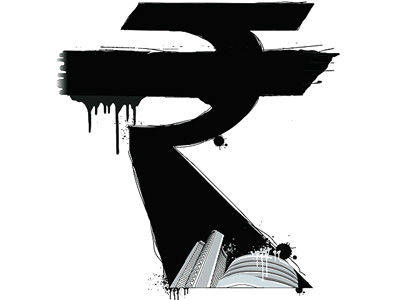
Between April 2012 and March 2013, the price of the stock rose slowly but steadily. It peaked at Rs 151 per share in early March 2013 before falling sharply. Between late May and December, volumes in the stock averaged a few hundred to a few thousand a day. From January onwards, volumes soared to as much as a few lakh shares before dropping steeply after April 1 this year.
Global Securities, along with two
other companies also listed on the BSE, Finalysis Credit and Guarantee and
Aricent Infra, are the subject of a recent complaint to the BSE that claims
that the shares of these companies were traded in a way as to enable brokers to
convert client funds from black to white. ET Magazine approached each of the
companies asking for a response. Finalysis managing director Sajjad A Qadir
said: "Yes we are aware of complaints. We are conducting an inquiry and
the authorities too are investigating the matter."
A compliance officer of Aricent
infra responded: "We have not yet received intimation of any such
complaint by the BSE authorities nor we have received any such complaint at our
end. We will certainly look into the matter at our end." Communications to
the official email IDs of Global Securities and follow-up calls to officials
did not elicit a response.
In response to a questionnaire, BSE
responded: "The exchange routinely receives various letters/complaints on
various scrips ... wherever warranted [it] conducts the necessary analysis/
investigation... The exchange does not comment on the status of the
investigation of individual cases."
Regulators could well find that
trading in stocks of these companies was legitimate, and that they were not
used by operators to launder funds. But complaints about manipulation of
stocks, many of them 'penny' stocks, to enable conversion of black money into
white are hardly new. Here's how shares in listed companies are used for
conversion:
Black Listing
While there are various ways in
which this is done, the basic principle arises from the fact that under Indian
tax law, long-term capital gains on listed equity shares (capital gains when
there is at least a year's gap between the time a share is bought and when it
is sold) is tax-free.
A broker and his client could strike
a deal whereby the broker sells shares in a penny stock to his client for a low
price, say a few rupees. The catch here is that the contract note issued to the
client is backdated to a year earlier. In the interim, the broker has
manipulated the price of the stock up through circular trading — two or more
brokers circulate the stock between them each selling at a higher price than
earlier.
Monday, August 12, 2013
Why You Must Have an PAN Card
PAN (Permanent Account Number) is
useful in number of ways and it is requisite compulsory for some of yours
financial dealings. With the government of India's intiatives and legal
reforms, this particular card has become more crucial than ever before
regarding various legal and financial dealings. Here we bring to you, some of
the ways why your PAN card may be crucial and rather useful:
Bank Fixed Deposits

While depositing any amount in
excess of Rs. 50,000 in the private banks, a copy of the PAN card needs to be
submitted with the rest of the documentation. This will then ensure that the
bank issues a TDS certificate and also deducts 10% TDS or whichever rate is
legally relevant. On failure to provide for a PAN card copy, one will not get
the TDS certificate and also the slab for tax deduction is higher at 20% of the
amount. Even Form 15G or 15H will not help in saving taxes in this case.
Payments in Hotel and Restaurants
For any bill amounting to Rs. 25,000
and above, you will have to submit a copy of the PAN card, whether the payment
is in cash or by credit/debit card.
Payment to travel agents
If you are thinking of a foreign
tour, or plan to exchange a large volume of foreign currency in a single transaction,
worth over Rs. 25,000, then a copy of the PAN card needs to be submitted.
House Renting
While renting personal space for
residence or even for commercial purposes, the landlords usually ask for a copy
of the PAN Card as primary identity proof, and other details.
Jewellery purchases
Everytime one purchases jewellery
above a certain value from any jewellery store, one would have to produce a
copyt of the PAN Card. this move has been taken to ensure that black money
doesnt start flowing into the system.
Bank Finance
When you approach banks for home loans, mortgage loans ,
they ask you for Income tax return. The question of Income tax return does not
arise when you don’t have Pan Card.
Some
of the other important uses of the PAN card includes payment in 2nd hand car
dealings, installation of telephone, visa facilitation centres.
Friday, August 9, 2013
Dont File Service Tax return (ST-3)!!!!Cheers!!!
No Need to file Service Tax return (ST-3)when no service is rendered during the relevant period and even
not required to opt for VCES
We are sharing
with you an important judgement of the Hon’ble Kolkata Tribunal in the
case of M/s Suchak Marketing Pvt Ltd Vs. Comm.of Service Tax, Kolkata [2013
(6) TMI 641]and detailed analysis on following issue:
Issue:

WhetherService
provider is required to file Service Tax Return where no service is rendered?
Facts of the
case:
M/s Suchak
Marketing Pvt Ltd (“the Assessee“ or “Suchak”) is registered under the
taxable servicecategory of constructions in respect of commercial or industrial
building and civil structure servicesunder Chapter V of the Finance Act, 1994
(“the Finance Act”).
During the period April, 2005 to March, 2008 the Assessee has not
provided any service and also has not filed Service Tax Return. However the
Assessee filed six “Nil” belated Service tax return for the period September, 2005
to March, 2008 on November 18, 2008.
Thereafter the Department
issued a show cause notice proposing to impose penalty under Rule 7C of the
Service Tax Rules, 1994 (“the STR”)
and Section 77 of the Finance Act. The Adjudicating Authority vide the Order-in-Original
ordered the Assessee to pay Rs. 12,000/-for each ST-3 Return under Rule 7C of
STRfor late filing of Service Tax Return and also imposed penalty of Rs.
2,000/- under Section 77 of the Finance Act.
Subsequently, the
Assessee against the Order-in-Original filed an appeal before the Commissioner
(Appeals). The Commissioner (Appeals) confirmed the late fee of Rs.12, 000/-
under Rule 7C of STR and dropped penalty under Section77 of the Finance Act.
Hence the Assessee
filed the present appeal before the Hon’ble Tribunal challenging levy of late
fee on the ground that it had not provided any services during impugned period
and thus was not required to file service tax return.
Held:
The Hon’ble Tribunal waived penalty under Rule 7C of the STR and set
aside order of the Commissioner (Appeals) relying on the Central Board of
Excise and Customs (“the CBEC”) Circular No.97/8/07-ST dated August 23, 2007
and judgment of the Tribunal in the case of Amrapali Barter (P.) Ltd. Vs. CST[2013-TIOL-32-CESTAT-KOL] (“Amrapali
Barter Case”).
The Hon’ble Tribunal observed that even in
terms of Rule 7C of the STR in case of filing of NIL returns, the Assessing
Officer has discretion to waive late fees for filing of ST-3 returns. Further
the Tribunal observed that this is a fit case to invoke proviso to Rule 7C of
the STR and waived late fees, relevant proviso of Rule 7C of the STR is as
under:
“Provided also that where the gross amount of service tax payable is
nil, the Central Excise officer may, on being satisfied that there is
sufficient reason for not filing the return, reduce or waive the penalty.”
The relevant extract of the Circular and Amrapali
Barter Case are as under for the
ease of your reference:
The Circular:
“6. ….Persons who are not liable to pay service tax (because of an
exemption including turnover based exemption), are not required to file ST-3 return.”
In Amrapali Barter Case,the Service provider is registered with the Service Tax
Authorities and has not provided any services during a particular return cycle
and was also not liable to pay any service tax during that return cycle. The
Hon’ble Tribunal has held that the service
provider is not required to file the Service Tax Return (even nil return) for
that period as per the CBEC Circular No 97/8/07-ST dated August 23, 2007. Further the Hon’ble Tribunal held that in case
the Service Provider files the nil return after considerable delay,then also no
penalty under Section 77 of Finance Actor fees under Rule 7C of the STR imposable
on him. Hence such case is fit for
invocation of the proviso to Rule7C and grant waiver of late filing fees.
Related open Query in the light of Service
Tax Voluntary Compliance Encouragement Scheme, 2013 (VCES):
The TRU (CBEC) has issued a recent Circular No. 170/5 /2013 – ST
dated. 08-08-2013 to provide clarification on stated query:
Query: Whether a person, who has paid service tax
for a particular period but failed to file return, can take the benefit of VCES
Scheme so as to avoid payment of penalty for non- filing of return?
Clarification: Under VCES a declaration can be made only in
respect of “tax dues”. A case where no tax is pending, but return has not been
filed, does not come under the ambit of the Scheme. However, Rule 7C of the
Service Tax Rules provides for waiver of penalty in deserving cases where
return has not been filed and, in such cases, the assessee may seek relief
under Rule 7C.
Way forward:
Assessee, who has paid service tax for a particular period but
failed to file service tax return, can be relieved on following ground:
·
Persons who are not liable to pay
service tax (because of an exemption including turnover based exemption), are
not required to file ST-3 return in terms of Circular No.97/8/07-ST dated
August 23, 2007 and cited judgement.
·
Even if service tax return is filed
late/ failed to file return – No Penalty in terms of Rule 7C of the STR.
Something to cheer……..enjoy.
Hope the
information will assist you in your Professional endeavors. In case of any
query/ information, please do not hesitate to write back to us.
Thanks & Best
Regards.
Bimal Jain
FCA, FCS, LLB, B.Com (Hons)
FCA, FCS, LLB, B.Com (Hons)
Released a Book - "Guide to Service Tax Voluntary
Compliance Encouragement Scheme, 2013", authored by Bimal Jain, FCA, FCS,
LLB
Disclaimer: The contents of this document are solely for
informational purpose. It does not constitute professional advice or
recommendation of firm. Neither the authors nor firm and its affiliates accepts
any liabilities for any loss or damage of any kind arising out of any
information in this document nor for any actions taken in reliance thereon.
Subscribe to:
Posts (Atom)